
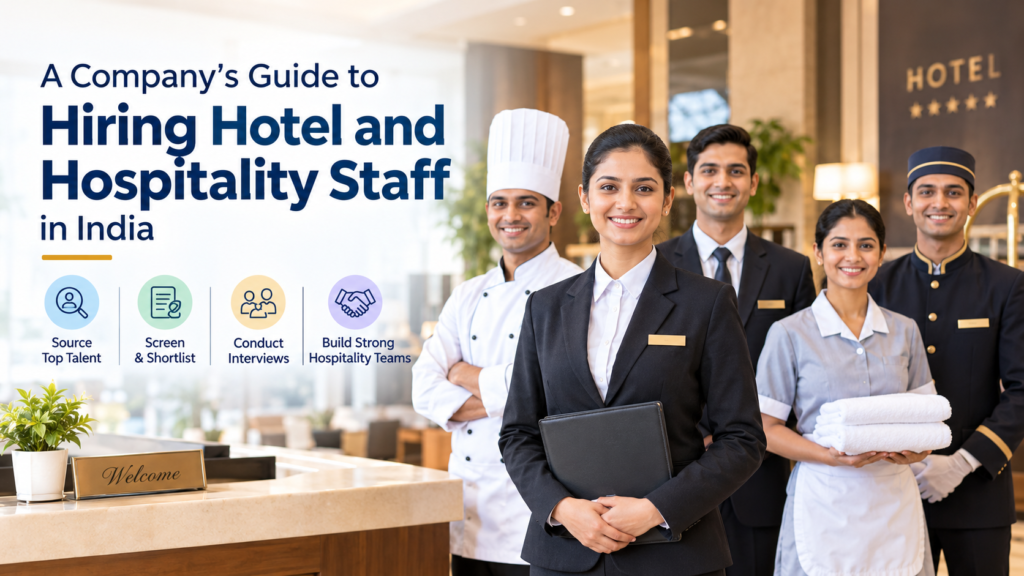
Running a hotel or hospitality business requires more than comfortable rooms, quality food, and attractive facilities. Behind every positive guest experience is a team of trained professionals who manage reservations, front-desk operations, housekeeping, food and beverage services, maintenance, and day-to-day hotel management.
For hotel owners, resort operators, restaurant chains, and hospitality groups, finding the right employees can become challenging when opening a new property, expanding operations, or managing seasonal demand. Hiring the wrong people can affect service quality, increase employee turnover, and put additional pressure on existing teams.
This is where professional recruitment support can make a difference.
Working with experienced hospitality consultants in India can help companies identify suitable candidates, streamline recruitment, and build teams that meet their operational requirements. Whether a business needs experienced hotel managers, chefs, front-office executives, housekeeping staff, or bulk recruitment for a new property, a structured hiring strategy is essential.
In this guide, we explain how companies can hire Hotel and Hospitality Staff in India, compare recruitment agencies, manage staffing costs, and choose a hiring partner that understands their business needs.
Why Is Hiring the Right Hotel and Hospitality Staff Important?
Hospitality is a service-driven industry where employee performance directly influences the guest experience. From the first interaction at reception to housekeeping and restaurant service, every team member contributes to how customers perceive a property.
Companies that invest in effective hospitality recruitment can build teams that support consistent service standards and smoother operations.
Here are some reasons why the right staffing strategy matters.
1. Better Guest Experiences
Front-office executives, housekeeping teams, restaurant staff, and guest relations professionals interact with customers throughout their stay. Hiring people with the right communication skills, training, and customer service experience helps businesses maintain service quality.
2. Efficient Hotel Operations
Hotels depend on coordination between departments. Recruiting employees with relevant experience helps managers distribute responsibilities, maintain operational standards, and handle daily workloads effectively.
3. Reduced Pressure on Internal HR Teams
Managing multiple vacancies internally can take considerable time. A recruitment partner can support candidate sourcing, screening, shortlisting, and interview coordination, allowing internal HR teams to focus on other business priorities.
4. Support for New Hotel Openings
Opening a new hotel or resort often requires hiring employees across several departments within a defined timeframe. A structured recruitment plan helps businesses identify staffing requirements and prioritize critical positions before operations begin.
5. Flexible Workforce Planning
Hospitality businesses may experience fluctuations in staffing requirements during holidays, festivals, weddings, conferences, and tourist seasons. Permanent recruitment, contract staffing, and project-based hiring can help companies plan their workforce according to operational needs.
Which Hotel and Hospitality Staff Should Companies Hire?
The positions required depend on the property type, number of rooms, service offerings, business model, and expected guest volume.
Before beginning recruitment, companies should identify the departments that need additional employees.
Department | Common Positions |
Hotel management | General Manager, Hotel Manager, Operations Manager |
Front office | Front Office Executive, Receptionist, Guest Relations Executive |
Housekeeping | Housekeeping Supervisor, Room Attendant, Housekeeping Manager |
Food and beverage | Restaurant Manager, Waiter, Bartender, F&B Supervisor |
Kitchen | Executive Chef, Sous Chef, Commis Chef, Kitchen Assistant |
Sales and marketing | Sales Manager, Corporate Sales Executive, Marketing Manager |
Maintenance | Maintenance Technician, Electrical Technician, Facilities Manager |
Events and catering | Event Coordinator, Banquet Manager, Catering Supervisor |
Finance and administration | Hotel Accountant, HR Executive, Administrative Manager |
Security | Security Supervisor, Security Personnel |
Not every hotel needs to recruit for all these positions at once. A boutique hotel may require a smaller, multifunctional team, while a large resort or hotel chain may need separate teams for each department.
A professional recruitment agency can help companies define job requirements and shortlist candidates according to their specific operational needs.
How to Hire Hotel and Hospitality Staff in India: A Step-by-Step Guide
Hiring hospitality employees becomes easier when businesses follow a structured recruitment process rather than filling vacancies on an urgent basis.
Step 1: Identify Your Staffing Requirements
Start by reviewing your current workforce, business goals, and upcoming operational requirements.
Ask the following questions:
- How many employees are required?
- Which departments need additional staff?
- Are the positions permanent, contractual, or temporary?
- What experience and qualifications are necessary?
- What salary range has been approved?
- When must the selected candidates join?
For example, a resort preparing for a busy holiday season may need additional housekeeping staff, kitchen assistants, restaurant employees, and front-office executives.
A hotel preparing to open a new property may also need department heads, supervisors, and experienced operational managers before recruiting frontline employees.
Clear requirements help the recruitment team prioritize vacancies and identify suitable candidates more efficiently.
Step 2: Prepare Detailed Job Descriptions
A job description should explain the responsibilities, skills, experience, and expectations associated with each position.
For a hotel front-office executive, the requirements may include guest communication, reservation handling, check-in and check-out procedures, complaint resolution, and familiarity with hotel management software.
For an executive chef, the requirements may include menu planning, kitchen operations, food safety, inventory control, staff supervision, and cost management.
Avoid using the same generic job description for different positions. Specific requirements help attract relevant candidates and make the screening process more focused.
Step 3: Choose the Right Recruitment Channel
Companies can recruit hospitality professionals through internal HR teams, employee referrals, job portals, professional networks, recruitment agencies, or a combination of these channels.
Each option serves a different purpose.
Internal recruitment can work well for smaller hiring requirements. Job portals may provide access to a broad candidate pool, while specialized recruitment agencies can support targeted sourcing, screening, and bulk hiring.
For businesses managing multiple vacancies or opening a new property, working with hospitality recruitment consultants in India can provide structured recruitment support tailored to the roles and hiring timeline.
Step 4: Screen Candidates for Relevant Skills
Hospitality recruitment requires more than checking a candidate’s educational qualifications.
Employers should assess the skills required for the specific position.
For example:
- Front-office candidates should demonstrate communication, customer service, and problem-solving skills.
- Housekeeping supervisors should understand team coordination, cleanliness standards, and room inspection procedures.
- Chefs should demonstrate relevant culinary skills, kitchen management, and food safety knowledge.
- Hotel managers should have experience in operations, budgeting, team leadership, and guest satisfaction.
- Sales professionals should understand corporate accounts, business development, and hospitality sales processes.
Reference checks, practical assessments, and interviews can also help employers evaluate suitability.
The screening criteria should remain consistent across candidates applying for the same role.
Step 5: Coordinate Interviews and Final Selection
Once suitable candidates have been shortlisted, companies should establish a clear interview process.
Depending on the position, the process may include an HR interview, technical or practical assessment, department-head interview, and final management discussion.
For bulk hiring, interview scheduling can become complicated when multiple departments are involved. A recruitment partner can help coordinate interviews, collect feedback, and communicate with shortlisted candidates.
Before making an offer, employers should confirm salary expectations, notice periods, joining dates, job responsibilities, and any role-specific requirements.
Step 6: Plan Onboarding and Training
Recruitment does not end when a candidate accepts an offer. Employees need to understand the property’s service standards, workplace policies, reporting structure, and operational procedures.
A structured onboarding programme can include:
- Property orientation and departmental introductions
- Guest service standards and communication guidelines
- Health, safety, and hygiene training
- Software and operational system training
- Department-specific procedures
- Performance expectations and reporting responsibilities
Good onboarding helps new employees understand their responsibilities and prepares them to contribute to daily operations.
How Can Companies Manage Hotel Staffing Costs?
Staffing costs are a major consideration for hotels, resorts, restaurants, and hospitality groups. However, choosing the lowest recruitment quotation does not automatically result in the lowest overall hiring cost.
Companies should evaluate the complete cost of recruitment, including the time spent sourcing candidates, conducting interviews, replacing unsuitable hires, and training new employees.
Businesses searching for Best Discounted Prices for Companies Requiring Staffing & Hiring in India should compare recruitment proposals carefully and confirm exactly what each service includes.
Practical Ways to Control Hospitality Recruitment Costs
- Finalize requirements before starting recruitment. Clear job descriptions and approved salary ranges reduce unnecessary shortlisting and repeated interviews.
- Plan bulk hiring in advance. Companies opening new hotels or expanding multiple departments can coordinate vacancies through a single workforce plan.
- Select the appropriate hiring model. Permanent recruitment may suit ongoing roles, while contract staffing or project-based recruitment may suit defined operational requirements.
- Evaluate candidate suitability carefully. Structured screening can help reduce the risk of unsuitable hires and repeated recruitment expenses.
- Review recruitment service agreements. Understand the fees, payment terms, screening scope, replacement conditions, and any additional charges before engaging an agency.
- Track recruitment performance. Monitor time to hire, cost per hire, joining rates, and employee retention to identify opportunities for improvement.
The goal is to find the right balance between staffing costs, candidate quality, and operational requirements.
Companies can explore Brightlist Global’s recruitment services to learn more about its recruitment and staffing solutions for businesses.
Permanent Recruitment vs Contract Staffing for Hotels
Not every hospitality position requires the same employment arrangement. The right model depends on the role, expected workload, property operations, and long-term workforce plans.
Hiring Model | Suitable For | Main Consideration |
Permanent recruitment | Hotel managers, department heads, long-term operational staff | Ongoing workforce requirements |
Contract staffing | Defined operational requirements and agreed staffing periods | Contract terms and employment responsibilities |
Project-based recruitment | New property launches, renovations, and specific hospitality projects | Project duration and milestones |
Executive search | General managers, operations directors, and senior leaders | Leadership experience and role suitability |
Bulk recruitment | Multiple vacancies across departments or properties | Coordinated sourcing and interview scheduling |
For example, a hotel chain opening a new property may need permanent department heads while using a separate recruitment plan for additional operational staff.
Businesses should discuss employment arrangements, applicable labor requirements, and responsibilities with their HR and legal teams before finalizing the hiring model.
Brightlist Global offers recruitment solutions that include permanent hiring, contract staffing, executive search, and bulk recruitment support, depending on business requirements.
How to Choose Among the Top 10 Hospitality Consulting Options in India
Companies searching for the top 10 hospitality consulting options should first distinguish between hospitality management consultants and hospitality recruitment agencies.
Hospitality management consultants may focus on operational efficiency, business strategy, revenue management, or service improvements. Recruitment consultants focus on identifying and hiring suitable professionals.
Some providers may offer both types of support, but the services are not interchangeable.
If your primary objective is to hire hotel managers, chefs, housekeeping teams, front-office executives, or other hospitality professionals, evaluate agencies based on their recruitment capabilities.
Here are ten factors to consider when comparing hospitality recruitment consultants in India.
1. Hospitality Industry Knowledge
The agency should understand hotel operations, restaurant management, guest services, housekeeping, and the skills required for different hospitality positions.
2. Candidate Sourcing Capabilities
Ask how the agency identifies candidates and whether its sourcing methods match the roles you need to fill.
3. Screening and Shortlisting Process
Understand how qualifications, experience, practical skills, and role suitability are assessed before candidates are presented.
4. Bulk Hiring Support
If you are opening a new property or recruiting across several departments, check whether the agency can coordinate multiple vacancies.
5. Senior-Level Recruitment
For general managers, operations directors, and other leadership roles, evaluate the agency’s experience in executive search and senior hiring.
6. Flexible Recruitment Solutions
Check whether the agency supports permanent recruitment, contract staffing, project-based hiring, and other relevant employment arrangements.
7. Transparent Commercial Terms
Compare recruitment fees, included services, payment conditions, and replacement policies.
8. Communication and Reporting
Regular updates on candidate sourcing, interview progress, and pending decisions can make the hiring process easier to manage.
9. Geographic Coverage
Consider whether the agency can support your required cities, multiple properties, or relevant international hiring requirements.
10. Business-Specific Approach
The agency should understand your property type, service standards, staffing budget, and hiring priorities instead of using the same recruitment approach for every client.
These criteria offer a practical framework for comparing the top 10 hospitality consulting or recruitment options relevant to your business. Rather than relying on an unverified ranking, shortlist agencies according to your actual hiring requirements and assess their suitability before making a decision.
Why Companies Consider Brightlist Global for Hospitality Recruitment
Finding qualified hospitality professionals requires a clear understanding of the role, relevant experience, and the service standards expected by the employer.
Brightlist Global provides hospitality recruitment solutions for hotels, resorts, restaurants, hospitality groups, catering businesses, and other service-oriented organizations.
Its hospitality recruitment services are designed to support different workforce requirements, from frontline hiring to senior management recruitment.
Depending on the position and business requirements, companies can explore support for:
- Permanent hospitality recruitment
- Hotel and resort staffing
- Front-office and guest relations hiring
- Housekeeping and operational staffing
- Chefs and food and beverage professionals
- Hospitality executive search and leadership hiring
- Bulk recruitment for new property openings
- Contract and project-based staffing
- Interview coordination and candidate shortlisting
Recruitment Support for New Hotel Openings
Opening a hotel requires employees across multiple departments, often within a limited period. Brightlist Global can work with businesses to understand their workforce requirements, identify priority positions, and coordinate recruitment activities.
Recruitment for Hotels, Resorts, and Restaurant Groups
Different hospitality businesses need different combinations of operational, managerial, and customer-facing employees. Recruitment requirements can be aligned with the property type, expected workload, experience levels, and approved budget.
Flexible Staffing for Changing Business Needs
Businesses may need permanent employees for ongoing operations and additional staff for defined projects or temporary requirements. The appropriate recruitment solution depends on the position, employment arrangement, and applicable regulations.
To explore the available services, visit Hospitality Recruitment Consultants in India – Brightlist Global.
You can also review How to Choose the Right Hospitality Recruitment Agency in India for Your Business for additional guidance on evaluating recruitment partners.
How to Measure the Success of Your Hospitality Recruitment Strategy
Hiring employees is only one part of workforce planning. Companies should also evaluate whether their recruitment process is meeting operational and business objectives.
The following metrics can help HR teams assess recruitment performance.
Time to hire: Measures the time required to move from the start of recruitment to an accepted offer, according to the company’s defined process.
Cost per hire: Tracks the total recruitment expenditure associated with each successful hire.
Interview-to-selection ratio: Helps assess whether shortlisted candidates meet the employer’s requirements.
Offer acceptance rate: Shows how many selected candidates accept their offers.
Joining rate: Tracks how many candidates who accept offers actually join the organization.
Early employee retention: Helps identify whether new employees remain in their positions during the initial employment period.
Hiring manager satisfaction: Measures whether the selected candidates meet the requirements communicated by the hiring team.
For hospitality businesses, these metrics should be reviewed alongside guest service standards, operational needs, and workforce stability.
For example, if a hotel repeatedly experiences high turnover in a particular department, management may need to review job expectations, compensation, working conditions, onboarding, or the candidate selection process.
Recruitment data can help companies make better workforce decisions over time.
Conclusion
The success of a hotel or hospitality business depends on the people responsible for delivering its services every day. From hotel managers and chefs to front-office executives and housekeeping teams, each employee contributes to operational efficiency and guest satisfaction.
A structured hiring strategy helps companies define workforce requirements, assess candidate suitability, control recruitment costs, and plan for future staffing needs.
When comparing hospitality consultants in India, businesses should consider industry knowledge, candidate screening, recruitment flexibility, transparent pricing, and the ability to support their hiring requirements.
Brightlist Global supports companies seeking hospitality recruitment, staffing, executive search, and bulk hiring solutions.
Whether you are opening a new hotel, expanding a restaurant group, managing a resort, or strengthening an existing hospitality team, the right recruitment approach can help you move forward with greater clarity.
Looking to hire hotel and hospitality staff in India?
Connect with Brightlist Global to discuss your hiring requirements and explore recruitment solutions tailored to your business.
Visit: https://brightlistglobal.com/hospitality-recruitment-consultants-india/
Share your required positions, number of employees, location, experience criteria, and hiring timeline to begin a recruitment discussion.